
Songmont Review $179M Revenue, 59% CAGR, and Tanner Leatherstein Rated the Luna Near Polène — The Chinese Leather Brand Rewriting the Luxury Rules

Tanner Leatherstein is not a brand ambassador or a content creator whose opinions are shaped by gifted product. He is a leather craftsman with decades of professional experience in leather goods production who built an audience by cutting open luxury handbags with an exacto knife and assessing the materials, construction, and hidden components against the retail price. When he rated the Songmont Luna — a $350 bag from a Chinese brand that most Western buyers had never heard of — in the same quality tier as Polène ($400–$650) and Strathberry ($445–$650), he was delivering a verdict that the luxury handbag market’s traditional price-to-quality assumptions could not absorb without significant reassessment. Songmont’s financial performance makes the quality story more remarkable: $179 million in revenue on a 59% compound annual growth rate means the brand has been doubling roughly every 18 months — a growth trajectory that reflects genuine consumer adoption rather than viral moment. The Luna bag’s $350 price point, rated near $600-territory European competition on material quality, positions Songmont in the most interesting space in the leather goods market in 2026: the zone where quality has decoupled from country-of-origin pricing assumptions and a Chinese brand with European-quality leather and superior construction-to-price ratio is demonstrably outperforming where the market said it should sit.
Quick Highlights
Why Trust This Review
This review draws on Tanner Leatherstein independent leather assessment videos (YouTube), Songmont.com product specifications, Jing Daily Songmont brand coverage, fashion community independent buyer reviews from 2024–2026, Vestiaire Collective and The RealReal Songmont resale pricing, and secondhand market data. No commercial relationship with Songmont exists.
Full Review Breakdown
The Tanner Leatherstein Assessment: What It Actually Measured
Tanner Leatherstein’s evaluation methodology involves physical disassembly of leather goods — examining the leather thickness, tannage method, interior lining quality, hardware components, and stitching construction against the retail price. When he assessed the Songmont Luna, the specific findings were: full-grain leather (the highest quality leather grade, not corrected-grain or bonded), vegetable-tanned finish (the most labour-intensive and durable tanning method, typically reserved for products at higher price points), Riri zipper hardware (the Swiss zipper manufacturer used by Bottega Veneta, Prada, and Loro Piana), and hand-waxed edge finishing (a construction detail that adds time and cost but significantly improves edge durability). These are not stylistic assessments — they are material and construction verifications. At $350, the materials specification that Tanner Leatherstein identified in the Luna is not commercially logical if you expect Chinese leather goods to sit below European counterparts on objective material quality criteria.
Why 59% CAGR Is the Most Important Number in Songmont’s Story
Revenue growth rates reflect real consumer behaviour. Influencer marketing can generate a viral moment — it cannot generate 59% compound annual growth sustained over multiple years. The buyers driving Songmont’s $179 million revenue are repeat purchasers, referral-driven new customers, and secondhand market participants confident enough in the product’s quality to pay 60–80% of retail on Vestiaire. These are the signals of a brand with genuine product quality and consumer loyalty, not manufactured hype. The growth trajectory also tells the story of a leather goods market in structural transition: Western buyers have discovered that the country-of-origin assumption — that European-made automatically means quality-superior — is not universally accurate in 2026, and Songmont’s growth is partly a function of how many buyers have made that discovery independently.
The Luna’s Patina Evolution: A Feature, Not a Flaw
Vegetable-tanned leather is biologically active — it responds to handling, heat, oils from skin contact, and UV exposure by developing a patina, darkening gradually and acquiring a character that is unique to the individual bag and how it has been used. This is considered the premium characteristic of fine leather goods — Hermès Barenia leather and Bottega Veneta intrecciato develop patina in exactly this way. Buyers accustomed to the stable surface of corrected-grain or coated leather goods may interpret the darkening of vegetable-tanned leather as discolouration or quality deterioration. It is the opposite: a bag that develops patina is a bag made from the best leather grade available. The correct buyer expectation for the Songmont Luna is that it will look slightly different in year three than it did when purchased — and better, not worse, in the assessment of anyone who understands fine leather.
Songmont vs European Competitors: The Honest Pricing Analysis
At $350, the Songmont Luna sits $50–$300 below the Polène, Strathberry, and A.P.C. bags that occupy the same quality tier by Tanner Leatherstein’s assessment. The pricing differential has three primary explanations: lower brand heritage premium (Songmont does not have decades of European luxury association to price into the product), lower retail and distribution costs as a primarily DTC business, and the absence of the import duty pricing that makes European goods more expensive in the US market. What the pricing differential does not reflect is inferior material or construction quality — the Tanner assessment specifically contradicts that explanation. For buyers making a purely analytical purchase decision, the Songmont Luna is the most evidentially justified value in the $300–$700 leather bag market in 2026.
Products Worth Buying
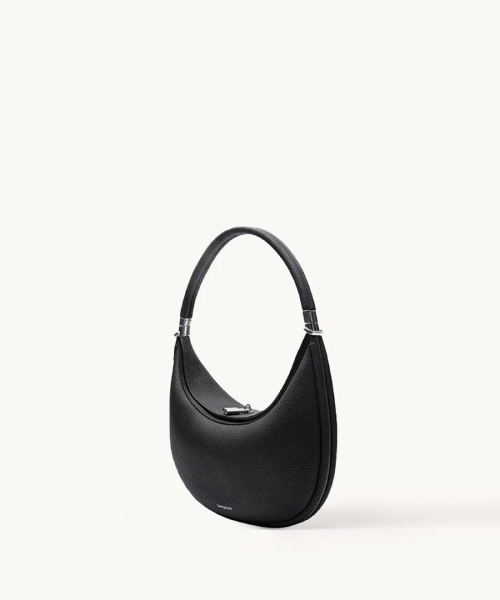
Songmont Luna Bag (Medium)
The brand’s defining piece and the subject of Tanner Leatherstein’s assessment. Full-grain vegetable-tanned leather, Riri zippers, hand-waxed edges. Available in mushroom, pine, warm camel, and seasonal colourways. Purchase in mushroom or pine for maximum colourway longevity.
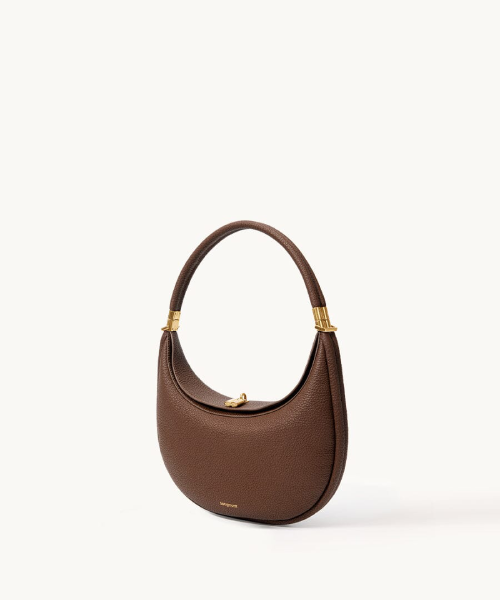
Songmont Luna Nano
The compact version for buyers who want the Luna’s leather quality in a camera-bag scale. Crossbody and handheld carry. The correct choice for city day use or evening occasions where the medium Luna is too substantial.
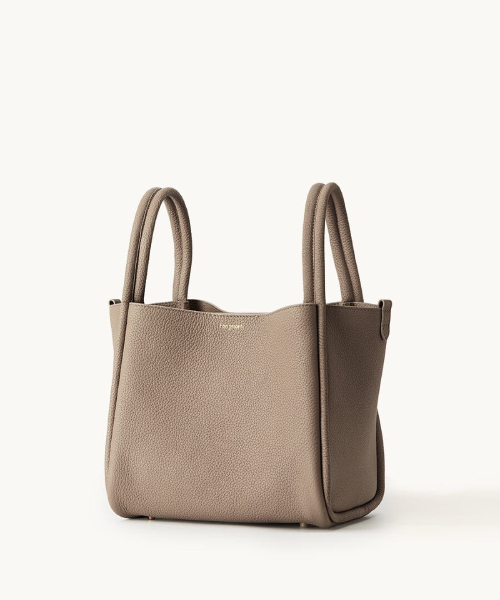
Songmont Arch Bag
A structured alternative to the Luna’s soft slouch. Architectural top-handle silhouette. Professional carry option for buyers who need structure rather than a relaxed form.
What Customers Actually Think
I bought the Luna after watching Tanner Leatherstein’s video and I completely understand why he rated it where he did. The leather quality is not what I expected for $350. It is what I expected for $600.
Three years of daily use and this bag has become the most beautiful bag I own. The patina it has developed is extraordinary. This is what quality leather does.
My Polène friend held my Luna for two minutes and asked me if I had bought a new designer bag. When I told her it was $350 Chinese brand she actually looked annoyed.
The Riri zippers alone tell you this is not a normal fast fashion bag. That zipper hardware is what is on my Prada. On a $350 bag. That is insane.
Customer service took four days to respond to my query about a colour option. The bag itself is perfect but they need to improve their response time.
Is It Worth It?
Unambiguously yes for buyers making evidence-based purchasing decisions. A bag independently assessed at Polène and Strathberry quality ($400–$650) at a $350 price point, with full-grain vegetable-tanned leather, Riri zippers, and secondhand market pricing confirming sustained value — the case for the Songmont Luna in 2026 does not require any qualification. Buy from songmont.com directly, choose mushroom or pine for longevity, and allow the patina to develop naturally.
Competitors Table
Feature Songmont Polène Strathberry A.P.C. Manu Atelier Cesta Collective
Luna equivalent price $350 $450–$650 $445–$650 $450–$600 $395–$550 $395–$595
Leather grade Full-grain Full-grain Full-grain Full-grain Full-grain Full-grain
Tannage Vegetable-tanned Vegetable-tanned Mixed Mixed Mixed Vegetable-tanned
Zipper hardware Riri Lampo Riri (selected) Lampo YKK Riri (selected)
Manufacturing China Portugal China/Europe Romania Turkey Kenya/Colombia
Tanner Leatherstein rated Near Polène quality Benchmark Near Polène Not assessed Not assessed Not assessed
Resale market strength Strong (60–80% retail) Strong Strong Moderate Moderate Limited
Frequently Asked Questions
Is the Songmont Luna made in China?
Yes. Songmont is a Chinese brand and products are manufactured in China. The Tanner Leatherstein assessment directly contradicts the assumption that Chinese manufacturing means lower quality — the material and construction specifications he identified are objectively premium regardless of geographic origin.
Why does the Songmont Luna leather darken over time?
The Luna is made from vegetable-tanned leather, which develops a patina — a characteristic darkening and character change — through contact with light, heat, and the oils from human handling. This is a premium leather behaviour, not a defect. It is the same quality that makes Hermès Barenia leather desirable and what distinguishes fine leather goods from coated or corrected leather.
How does Songmont compare to Polène?
Based on Tanner Leatherstein’s independent assessment, the leather and hardware quality are comparable — both use full-grain leather and premium zipper hardware. Polène costs $100–$300 more per piece, reflecting the French brand’s heritage premium and DTC positioning. For buyers making evidence-based comparisons, the Songmont Luna delivers comparable material quality at a meaningfully lower price.
What is the Songmont return and warranty policy?
Free returns on Songmont.com orders and a two-year manufacturer’s warranty covering defects in materials and construction. The two-year warranty is competitive for the price category.
What are the best Songmont colourways in 2026?
Mushroom and pine are the strongest long-term colourway choices — earth tones that complement both casual and professional wardrobes without trend-dependency. Warm camel is the correct choice for buyers who want a warmer beige-tan tone. Avoid seasonal colourways unless the specific piece is being purchased for a defined occasion.
Final Verdict
Songmont in 2026 is the most evidentially compelling value in the $300–$700 leather bag market — a brand with independent material quality assessment placing it near European competitors charging $100–$300 more per piece, a financial growth trajectory ($179M, 59% CAGR) reflecting genuine consumer adoption at scale, and a flagship product (the Luna) with full-grain vegetable-tanned leather and Riri hardware that competes on component specifications with bags at twice the price. The customer service response time is a genuine limitation. The perceptual barrier of Chinese-brand origin is a bias, not a quality signal. For buyers who make decisions on evidence rather than country-of-origin assumption, the Songmont Luna is the most straightforwardly justifiable bag purchase in its category in 2026. Scorecard
Our Verdict
You Might Also Like
 Accessories
NuMe Review ( Magic Curling Wand Retails at $99, Sells Regularly for $34 — What Far Infrared Titanium Actually Means for Your Hair
 Accessories
Belle Juri Review Pearl Skulls in 925 Sterling Silver, TrustScore 3.5/5 at Trustpilot — What the Reviews Actually Tell You
 Accessories